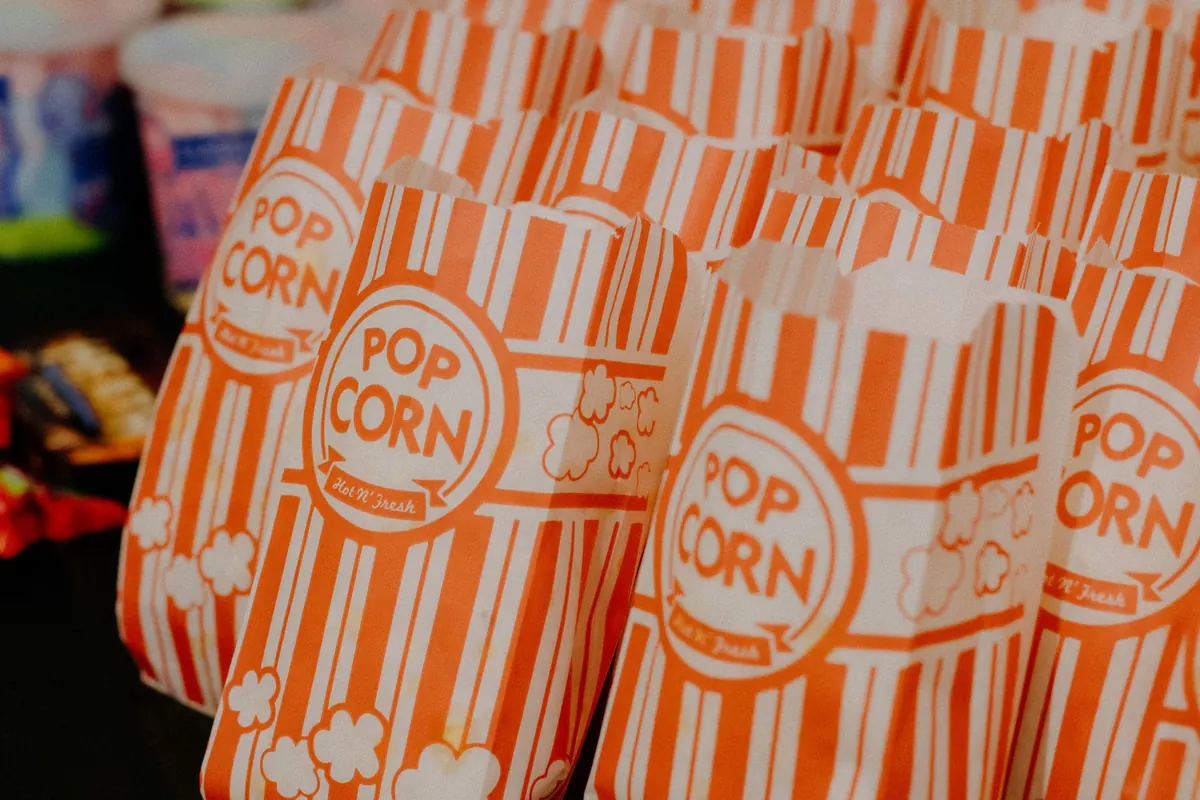
A backyard movie night has a reputation for being more trouble than it's worth. You picture tangled extension cords, a projector that won't talk to the laptop, and twelve people sitting in the dark waiting for someone to find the right input.
It doesn't have to go that way. Treat it like car camping: set up the boring parts while it's still light, keep the food to things people can eat with one hand, and decide the rain plan before you invite anyone. Fall is the friendliest season for this. Sunset arrives early enough that you can start at a reasonable hour, the air is cool enough that blankets feel like a gift, and you're not fighting July mosquitoes.
The order below matters more than the gear. Get the screen, the sound, and the seating right, and most of the evening runs itself.
Start with the surface. A white bedsheet works, but only if it's pulled tight; every wrinkle becomes a wobble in the picture. An inflatable outdoor screen solves that and gives you a frame to anchor guy lines to. The side of a light-colored garage works too, as long as it faces away from the street and isn't textured or peeling.
Look for a spot with no windows behind the screen, no porch light within twenty feet, and no streetlight in anyone's line of sight. Then check the motion-sensor lights. If one will click on every time somebody walks to the cooler, tape over the sensor or pull the bulb for the night.
Here's the best tip in this piece: run a full test the night before, at the same hour you plan to start. At 7:30 in the evening you'll see exactly how bright the image is against a darkening sky, which is not something you can judge at noon. Follow your projector's manual for the throw distance that matches your screen size, and keep the lens roughly level with the middle of the screen. Tilt it upward and you'll spend the whole movie fighting a trapezoid.
If your projector has a keystone setting, use it only as a last resort. Digital correction crops pixels; moving the projector two feet back costs you nothing.
Weak audio ruins a movie faster than a soft picture. Put the speaker behind the seating or directly under the screen, facing the audience, and lift it off the grass if you can. The same speaker sounds noticeably better on a cooler lid than on damp ground.
Test with the quietest scene in the film, not the loudest. Explosions will always be audible; whispered dialogue is where you learn whether the setup has headroom. If you're playing from a laptop, confirm the audio is routing to the speaker instead of the laptop, and turn subtitles on. Nobody in a backyard minds subtitles.
Run cables along the edge of the yard rather than across the walking path, and tape down anything that has to cross it. A strip of duct tape prevents the trip you'd otherwise spend the evening apologizing for. If you're using Bluetooth, pair the speaker before guests arrive — pairing in front of an audience is where the five awkward minutes live.
People move around at outdoor screenings. They get up for drinks, shift when the temperature drops, and migrate toward whichever spot has the best sightline. So set out fewer chairs than you have guests, and arrange them in two loose rows instead of a tight block.
Leave a clear aisle down one side. It's the difference between people quietly slipping out for a refill and someone stepping over a stranger's legs during the best scene of the second act.
If you light a fire pit or run a patio heater, keep it off to the side, never between the projector and the screen, and far enough away that people can warm up without roasting. Check your local burn rules first, and keep a bucket of water nearby. A single fire pit placed correctly does more for a cool October evening than three extra blankets.
This is where otherwise good hosts overextend. Anything requiring a fork, a plate, or a knife will end up abandoned on the grass. Serve food that works with one hand and one napkin.
Skip anything saucy or chocolate-coated. In the dark, on laps, in blankets, it's a losing proposition. And set a trash bag where people already are, or you'll be collecting cups from the flower beds for a week.
The trick to a calm evening is to work backward from showtime. Give yourself about ninety minutes of daylight, and do it in this order.
One power strip at the projector beats three extension cords daisy-chained across the patio. If your run is over fifty feet, use a heavier outdoor-rated cord; a thin indoor cord will run the projector but complain when the speaker warms up.
Two things kill outdoor movie nights faster than anything else: a fifteen-minute search for the right HDMI input, and a host who is still setting up when the guests arrive.
Check the forecast the morning of, and again two hours before. Then tell everyone the plan in the invitation itself — not in a group text at 6:45 when people are already in the car.
Pick one of these and commit:
Wind deserves its own plan. A screen that catches a breeze will flap all night. Anchor the bottom corners with sandbags or water jugs, and stake the frame if the ground allows. If the gusts are strong enough to move the screen, cancel — no movie is worth a torn projector.
Leave a single small light on near the back door so people can find their way out without a phone flashlight raking across the screen. Keep the movie under two hours; fall nights get cold around hour three, and the last twenty minutes of a long film are usually watched by three people and a dog.
When the credits roll, resist the urge to clean everything yourself at midnight. Stack the chairs, dump the cooler, and leave the screen for the morning. The whole point of doing the boring parts early is so that the end of the night is easy too.
That's the entire secret. Test in the dark, tape the cables, keep the food simple, and know what you'll do if it rains. Do those four things and you'll get the evening you were picturing — everyone wrapped in blankets, nobody hunting for an input.
Photo: Nino Sanger / Pexels
A first neighborhood newsletter usually fails on tone, sourcing, or distribution, not on effort. Here's how to avoid...

Thrifting for home decor works when you shop with a plan: know what your room needs, spot solid construction, set a...

When my car died on a mountain pass at dusk, a town of two hundred people gave me a bed, a mechanic, and a lesson in...

Bobby's take on news, life, and more..
