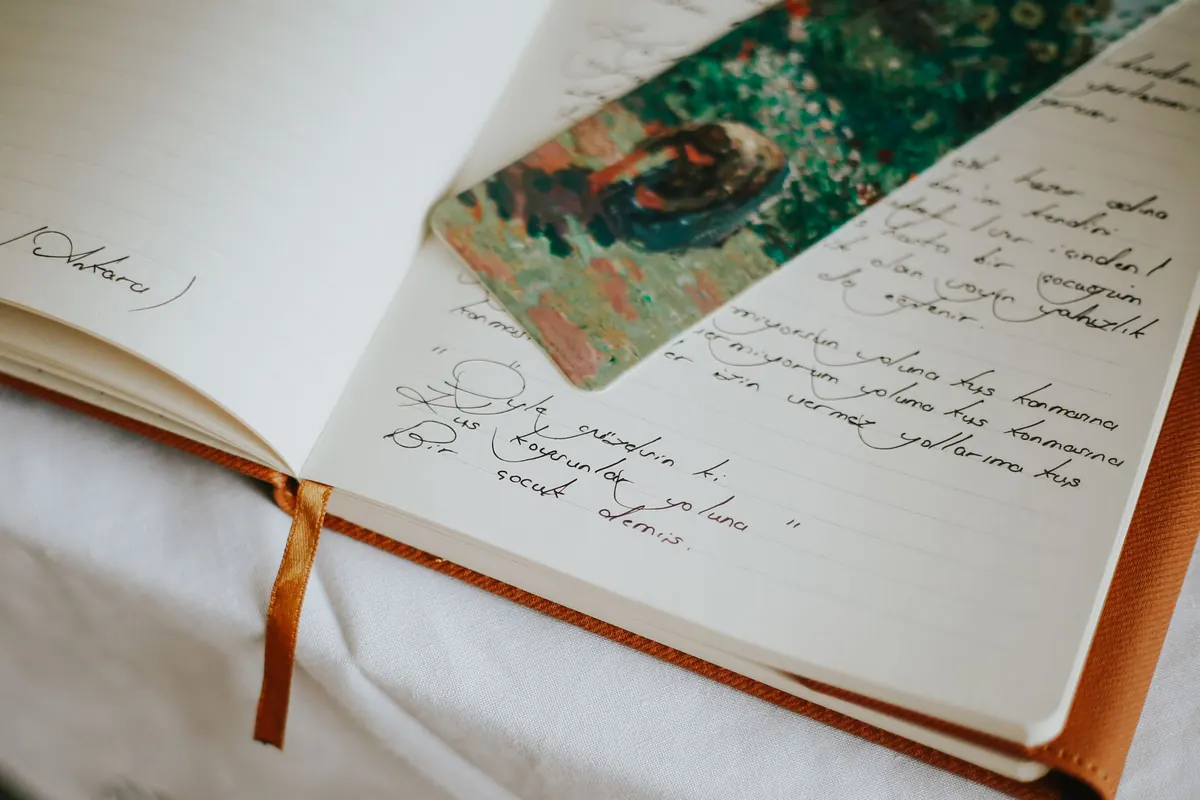
You do not need to be a writer to keep a journal. You need a pen, a few minutes, and a willingness to lower your standards far below what English class taught you. If past attempts turned into blank pages and guilt, the problem was probably not you. It was the format. A daily journal can be three messy lines, a list, or one sentence you would never say out loud. The goal is not literature. It is a place to put your thoughts so they stop circling your head at midnight.
Most people who hate writing hate performing. They imagine a leather notebook, neat handwriting, and profound reflections about life. That version of journaling is a hobby, not a requirement. For a daily habit, define journaling as any private written record of your day or your mind. A grocery list with a feeling attached counts. So does “Tired. Work was weird. Called Mom.”
If you can send a text message, you can journal. Better yet, you can stop judging the entry until after you have written it. The entry does not have to be interesting. It only has to exist.
Cues beat motivation. Choose a moment that already happens every day: the coffee brewing, the commute ending, lunch, brushing your teeth, or lying in bed. Put the journal there. Keep it visible. If you use your phone, move the notes app to the home screen and create a note called “Five minutes.”
Do not wait for the mood to strike. When the cue happens, write for five minutes at most. If you miss a day, there is no punishment. Habits grow from repetition, not intensity. Make the cue specific: “After I pour my coffee, I open the notebook.” vague plans like “I’ll journal more” tend to dissolve by noon.
Decision fatigue kills more journals than boredom does. Use the same simple structure every day. Here is a five-minute recipe:
If you finish early, stop. Do not add pressure. If you only do step one, that still counts as a successful journal entry.
Some days, five minutes is too much. Use three lines instead: one thing that happened, one thing you felt, one thing you need. That is enough. A journal is not a report. It is a check-in.
Perfectionism is the quiet reason many journals stop after three days. You misspell a word, hate your handwriting, and decide the whole project is ruined. Flip that rule. Ugly journaling is the point. Cross things out. Use arrows. Draw a bad circle around a word. Write in fragments. Leave a page blank and start again on the next one.
An ugly journal you keep beats a beautiful one you avoid.
A blank mind is normal, especially when you are tired. Keep a prompt bank and pick one without thinking too hard. If a prompt feels too heavy, answer lightly. You are not required to solve your life before breakfast.
You can also write about not wanting to write. “I have nothing to say. This feels silly. I am doing it anyway.” That is a real entry. The point is to keep the channel open, not to produce a masterpiece.
People often quit after one missed day because they treat the habit like a debt. It is not. Use two rules instead: never miss twice, and make the next entry tiny. If you skip a day, your next entry can be thirty seconds long: “Missed yesterday. Back now.” Do not try to catch up. Do not write two entries to make up for it. That turns journaling into homework.
Reduce friction wherever you can. Clip the pen to the notebook. Leave the notebook open. Set a phone reminder with a gentle name like “one line.” If bedtime is a bad time, switch to morning. If morning is chaotic, switch to lunch. The best time is the one you will actually use.
Write one line on a calendar. Write one word on a sticky note. Write the date and nothing else. The habit is showing up, not filling pages. If journaling consistently leaves you more anxious or brings up painful memories, it may help to talk with a therapist or doctor. A journal is a useful tool, but it is not a substitute for support.
Before you close this page, put a notebook where you will see it tomorrow. Or open a notes app and create a note called “Five minutes.” Write today’s date and one word: tired, fine, annoyed, hopeful. Then stop. That is the whole habit. Tomorrow, do it again.
If you hate writing, do not try to write more. Write smaller. The journal does not care whether you are eloquent, consistent, or deep. It only needs to be there when you show up. Start with one line. That is enough.
Photo: betül nur akyürek / Pexels

A first neighborhood newsletter usually fails on tone, sourcing, or distribution, not on effort. Here's how to avoid...

Thrifting for home decor works when you shop with a plan: know what your room needs, spot solid construction, set a...

A practical guide to screens, sound, snacks, seating, and weather backups for an easy fall movie night in your backyard.


Bobby's take on news, life, and more..
