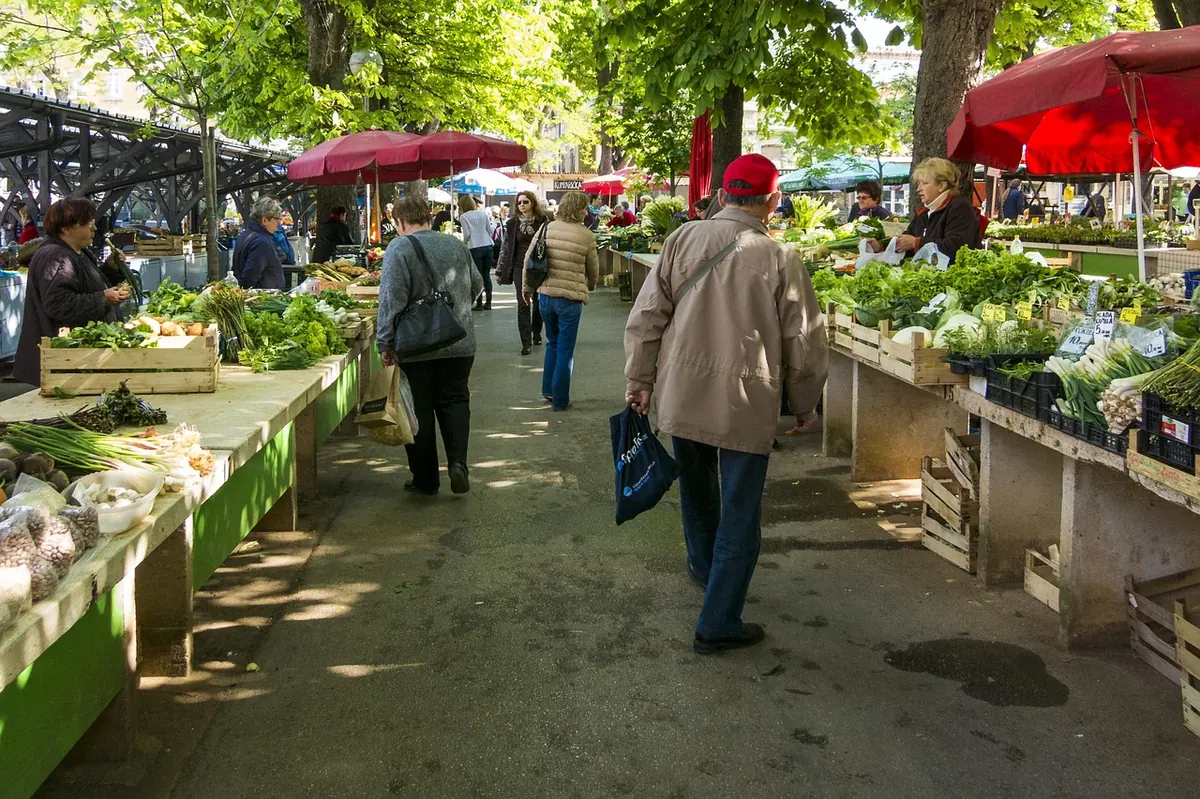
There is a particular kind of summer morning at a farmers market: folding tables, hand-lettered signs, a cooler full of corn, and the person who grew your dinner standing right in front of you. It can feel charming and slightly overwhelming at the same time, especially if you are used to shopping from a tidy list in a supermarket aisle. You don't need a rigid plan. You need a rough idea of when to go, what to bring, how much to spend, and how to talk to the people behind the tables.
Most summer markets open early, often by seven or eight in the morning, and the first hour is the calmest. Tables are fully stocked, growers are still arranging crates, and there is room to actually look at what you're buying. If you want the best pick of tomatoes, berries, or a specific cut of meat, arriving early is the single most useful habit you can build.
Mid-morning is the social hour. Crowds arrive, strollers clog the aisles, and lines get long. That's a pleasant way to spend a Saturday if you're browsing, but frustrating if you showed up with a list and a hungry family waiting at home.
The last hour is for bargain hunters. Vendors would rather sell what's left than pack it back into the truck, so you'll often find reduced prices on slightly bruised fruit and day-old bread. The trade-off is narrower selection. Check the closing time before you leave the house; many summer markets wrap up by early afternoon, and some weekday markets are smaller and far quieter than the Saturday version.
Decide on a number before you walk in and carry that much in cash. When it's gone, it's gone, which is a simple trick that works better than willpower in a tent full of peaches. If you know you're prone to overspending, set aside a small "treat" allowance and treat it as spent money, not savings.
Peak summer is when produce is most abundant, and abundance usually means better prices than you'd see in the off-season. That said, a farmers market is not automatically cheaper than a grocery store. Some items cost more because they were picked yesterday and handled far less. Compare once or twice, decide what's worth the premium to you, and buy the rest at your usual shop.
If money is genuinely tight right now, a conversation with a financial professional can help you sort priorities. For everyone else, the practical version is this: go with a number, spend it deliberately, and don't feel obligated to buy something at every stall.
Buy what is overflowing. That's the whole strategy. If a grower has twelve crates of zucchini, the zucchini is good and cheap. If there's one sad box of something, skip it.
In most regions, high summer means tomatoes, sweet corn, stone fruit, berries, cucumbers, peppers, eggplant, melons, green beans, and armloads of fresh herbs. Beyond produce, look for eggs, cheese, bread, honey, jam, and flowers, which are often the best value in the entire market.
Ripe peaches smell sweet and give slightly near the stem. Good corn feels heavy for its size, with tight green husks and slightly damp silk. Tomatoes should feel heavy and smell like a tomato at the stem. Berries are the exception: check the bottom of the container for crushed fruit, because the top layer always looks perfect.
A word on quantity: buy for the next three or four days, not the next three weeks, unless you plan to freeze, roast, or preserve. Four pounds of zucchini is a project, not a purchase.
Most growers would rather answer a question than watch you poke at their tomatoes. A few that work every time:
Tell them what you're planning to make and ask what they'd choose. You'll get better produce and a better conversation. Don't squeeze the fruit; ask instead. And don't haggle over a single item. Bulk discounts sometimes appear at the end of the day, but asking for a deal on one tomato is a bad look.
Go with modest goals: a bag of peaches, a loaf of bread, and something for dinner that night. Give yourself ten minutes to wander before you spend anything. Notice which stalls had the friendliest people and the best-looking produce, and make a note of it. The second trip will be easier, and by the end of August you'll have a route, a few favorite vendors, and a standing Saturday habit that costs about what a takeout dinner would.
Photo: pixifant / Pixabay

A first neighborhood newsletter usually fails on tone, sourcing, or distribution, not on effort. Here's how to avoid...
Thrifting for home decor works when you shop with a plan: know what your room needs, spot solid construction, set a...

A practical guide to screens, sound, snacks, seating, and weather backups for an easy fall movie night in your backyard.


Bobby's take on news, life, and more..
