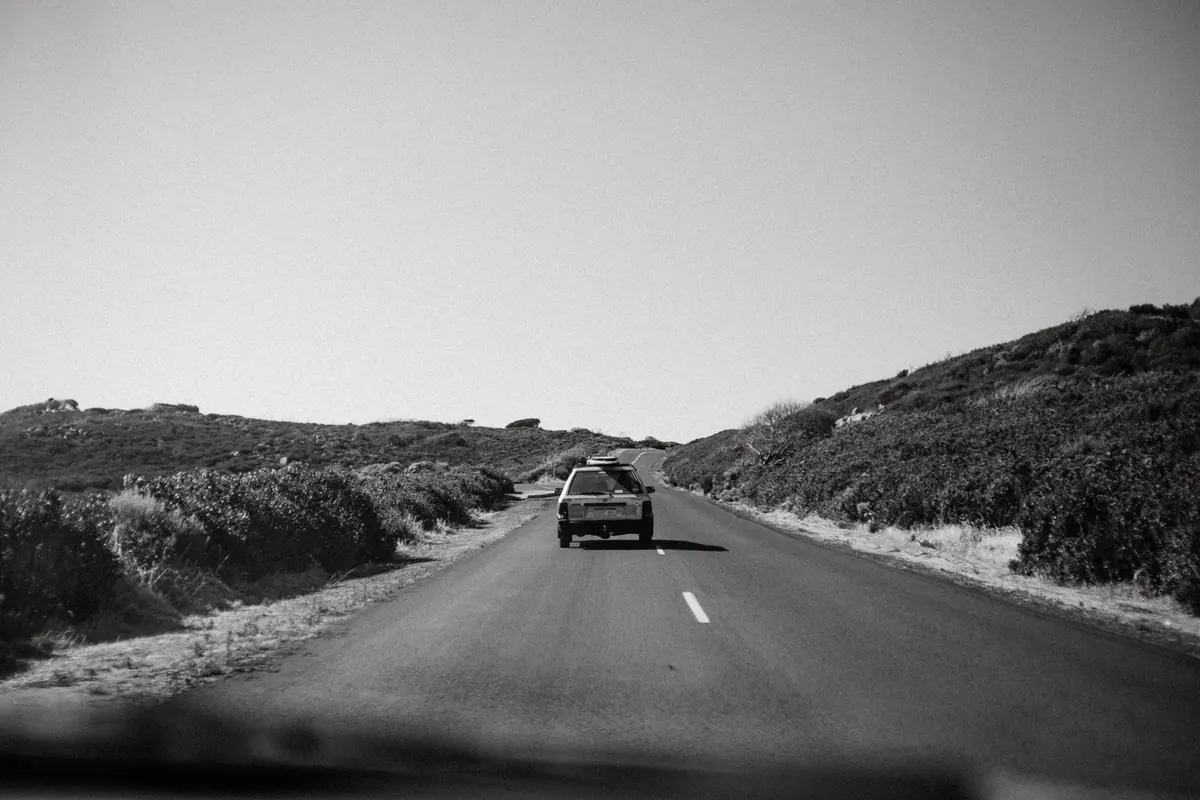
Two days, one driver, and a stretch of road that answers to nobody but you. A solo weekend road trip is one of the best cheap luxuries left — no group vote on where to eat, no negotiating over when to stop. It also means there is no second person to notice a tire that looks soft, or a phone sitting at eight percent in a dead zone. Handle a handful of small things before Friday afternoon and the whole trip stays loose instead of fragile. Here are twelve.
Do this in daylight, ideally two or three days out, so a slow leak or a burnt-out bulb has time to become an errand instead of a crisis. Walk the car once, all the way around, and actually look.
If the car is due for an oil change or the check-engine light has been winking at you for a month, deal with it now. A weekend trip is not the moment to test a theory.
Everything else on this list is flexible. Two things are not.
First, where you sleep. Even if the plan is "I'll figure it out," book one refundable room for the second night. Small-town motels close their front desks early, and arriving at 11 p.m. to a dark office and a "No Vacancy" sign is a special kind of tired. Second, anything with a timed entry — a park reservation, a ferry, a table at the one restaurant worth planning around.
Screenshot every confirmation and put them in one album on your phone. Phone signal is a rumor in a lot of beautiful places.
Download offline maps for the entire corridor, not just the destination pin. That means the highway, the town, and the twenty miles of county road at the end. If a turn-by-turn app has ever failed you, it failed you somewhere without bars.
Charge everything the night before and bring a car charger plus a power bank that holds at least two full phone charges. Keep a cable in the car permanently — the one you keep meaning to buy never materializes when you need it.
Solo travel safety is mostly about redundancy, not suspicion. Give one person your rough plan: route, hotel name, license plate, and when you expect to be back. Agree on a single check-in text each evening. That's it — no tracking apps required unless you want them.
A few habits that cost nothing:
Check local emergency numbers and road conditions for your route before you go. General habits like these are useful, but for anything specific to your health, your medications, or local regulations, ask a qualified professional or the relevant local authority.
The person who packs at 9 p.m. on Thursday is optimistic. The person standing at a windy overlook at 7 a.m. on Saturday is not. Pack for the second one.
Stop every two hours whether you feel like it or not. Get out, walk a lap, drink water. Drowsiness on a long straight highway arrives faster when there's no conversation to keep you alert. If you're yawning repeatedly, pull over and rest. No text, no view, and no schedule is worth driving through that.
Sit at the bar if there is one — service is faster and there's usually someone to trade a few words with. Otherwise bring a book. A solo dinner in a town you've never seen is one of the better parts of this kind of trip once you stop treating it as awkward.
Pick a two- or three-hour window with nothing in it. That's where the good detours happen: the roadside stand, the trailhead you didn't know about, the second cup of coffee.
Structure the logistics so tightly that the rest of the day can be completely unplanned.
Fill the tank. Charge the phone, the power bank, and the headphones. Load the car except for what you'll need in the morning. Lay out your clothes. Screenshot the confirmations one more time and text your check-in person the plan. Then set an alarm, put the keys in the same spot they always go, and go to bed early.
Do that, and Saturday morning starts with nothing to solve — just a car pointed in a direction you chose, and two days that belong entirely to you.
Photo: Rachel Claire / Pexels

A first neighborhood newsletter usually fails on tone, sourcing, or distribution, not on effort. Here's how to avoid...
Thrifting for home decor works when you shop with a plan: know what your room needs, spot solid construction, set a...

A practical guide to screens, sound, snacks, seating, and weather backups for an easy fall movie night in your backyard.


Bobby's take on news, life, and more..
